
Relocating to Raleigh & the Triangle?
Start here.
Thinking about a move to the Triangle? One of the best ways to understand this area is to experience it like you might actually live here. This is an insider’s guide to exploring Raleigh, Cary, Apex, Durham, and Chapel Hill before you buy — from a local Realtor who helps relocation clients land well.
Experience the Triangle like you already live here.
“As a local Realtor and longtime Raleigh resident, I help relocation clients look beyond the house itself — and understand the communities, lifestyle, location, commute, schools, resale considerations, and long-term value behind the decision.”
Leah Beeson
Broker · REALTOR®
Each side of the Triangle feels different.
Explore them on their own terms.
Tap a community to see where to stop, what to drive through, and how the commute actually works.
City energy
Raleigh
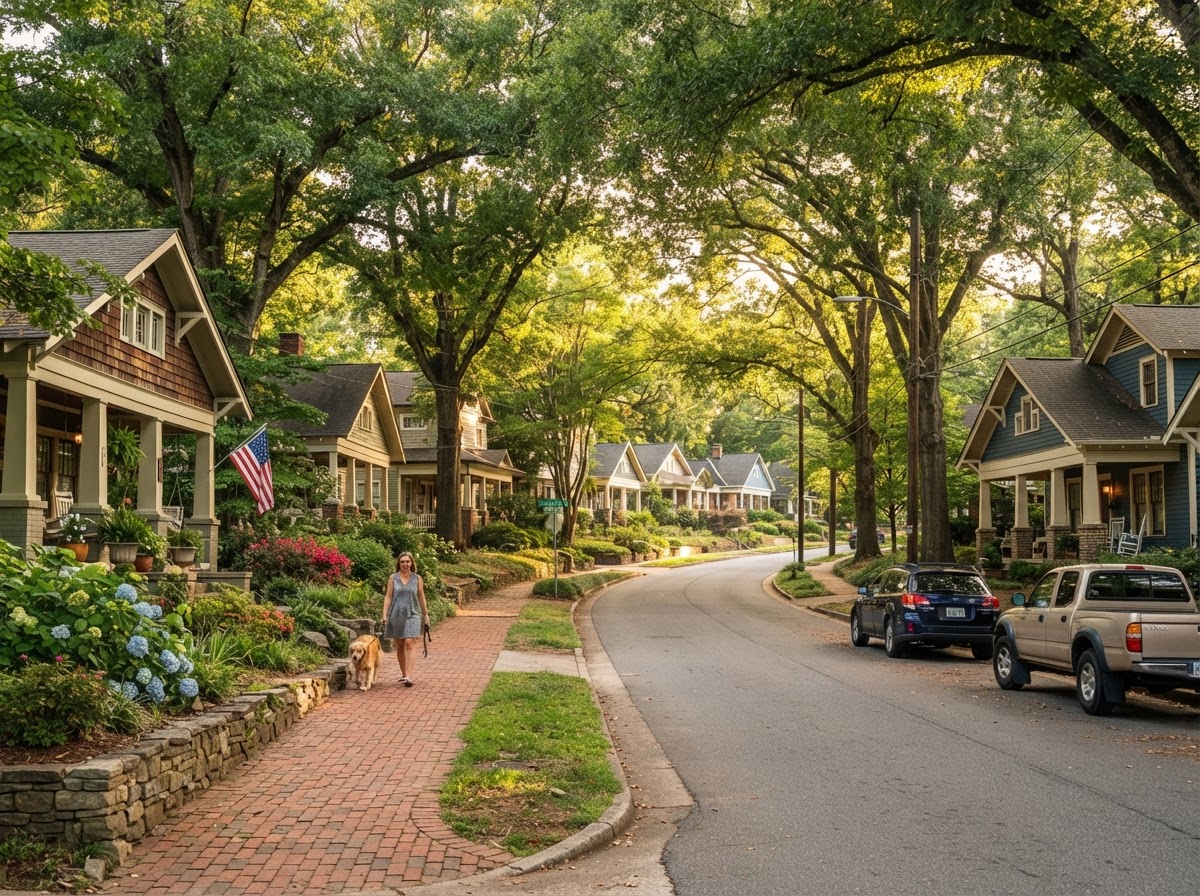
City energy + established neighborhoods
Worth a stop
Walkable shopping, restaurants, and coffee in one of Raleigh's original mixed-use villages — formerly Cameron Village. A great first stop to get a feel for inside-the-Beltline Raleigh.
815 Oberlin Rd, Raleigh, NC 27605
Art, trails, and outdoor space in one place — a perfect example of how Raleigh blends culture and green space. Walk the Museum Park trails and the giant art-house loop.
2110 Blue Ridge Rd, Raleigh, NC 27607
Raleigh's skyline-view park — open fields, walking paths, and seasonal events. Don't miss the Gipson Play Plaza and the rolling hills above the city.
2105 Umstead Dr, Raleigh, NC 27603
One of Raleigh's classic green spaces near NC State and downtown — paddle boats, a carousel, and shaded paths along the creek.
520 Ashe Ave, Raleigh, NC 27606
NC State University
Drive or walk through campus and the surrounding neighborhoods to understand this part of Raleigh — the energy, the streets, and how close it sits to downtown.
Restaurants, shopping, offices, and apartments wrapped around established residential neighborhoods — a very different feel from downtown and worth experiencing on its own.
4321 Lassiter at North Hills, Raleigh, NC 27609
Downtown Raleigh + Warehouse District
Restaurants, museums, coffee, and entertainment — the urban core. Walk the Warehouse District for a taste of Raleigh's newer, more industrial energy.
Local picks
- Cup A Joe
- Morning Times
- Beasley's Chicken + Honey
- Poole's Diner
- Videri Chocolate Factory
Drive through
- Five Points
- University Park
- Hayes Barton
- Budleigh
- North Hills
- Village District
Central Raleigh puts you minutes from downtown, NC State, and the museums — but inside-the-Beltline character comes at a premium.
Two days, one game plan.
A sample itinerary for a relocation visit — not a marathon of house tours, but a real sense of how it feels to live here.
Day 1
Raleigh
Morning
- Coffee near the Village District
- Drive or walk through central Raleigh neighborhoods
- NC Museum of Art + Museum Park
Afternoon
- North Hills
- Five Points / University Park
- Dorothea Dix Park
Evening
- Downtown Raleigh or the Warehouse District for dinner
Day 2
Choose your direction
Day two depends on where you think you might live. Pick the direction that fits your commute and your gut — and with an extra day, spend more time in the two or three communities you liked best rather than trying to see everything.
West / Southwest
Cary → Downtown Cary Park → Apex → Holly Springs
Polished, livable, and close to RTP — the suburban sweet spot.
North
North Hills / North Raleigh → Wake Forest
Established neighborhoods to the north, with a town-of-its-own feel.
Triangle / University
RTP → Durham → Duke → Chapel Hill / Carrboro
Creative Durham and the college-town energy of Chapel Hill + Carrboro.
South
Apex → Holly Springs → Fuquay-Varina
More space and value, with small-town personality and two downtowns.
Look at the life around them.
A relocation checklist for buyers who want to understand a place, not just a property.
Fair Housing Notice — Leah Beeson does not steer buyers toward or away from any community based on race, color, religion, national origin, sex, disability, familial status, or any other characteristic protected by federal, state, or local fair housing law. The resources here are provided to help you evaluate locations based on your own priorities — lifestyle, commute, budget, and long-term goals.
That’s where I can help.
Relocating isn’t simply about finding a house. It’s about understanding where your life will work best. I help my clients narrow down the Triangle based on the things that matter to them — lifestyle, commute, housing style, budget, location, future plans, and long-term investment — and then safeguard the process from the first neighborhood tour through closing.
Planning a relocation visit? Let’s build your Triangle game plan.